 by
by 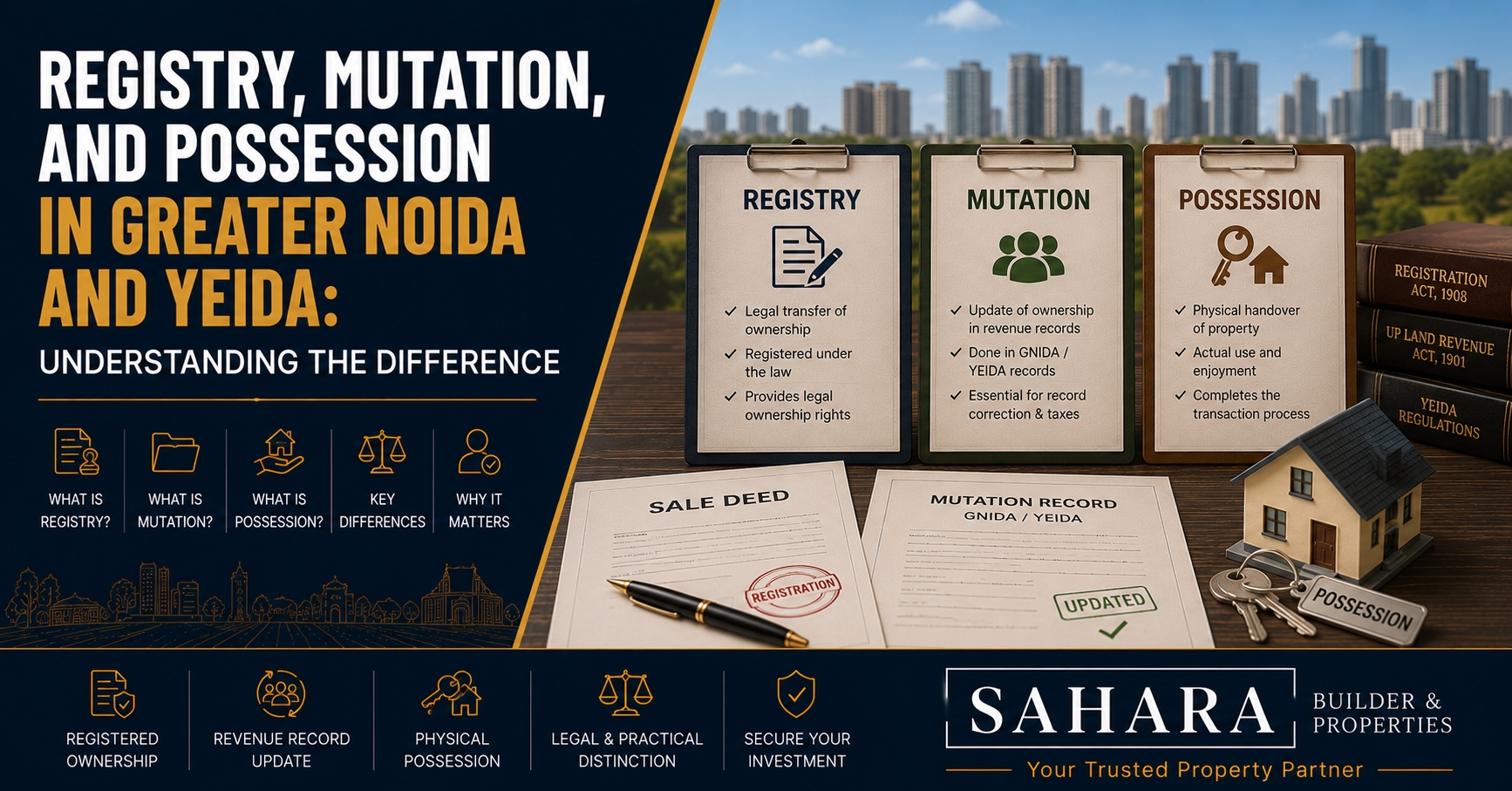
Registry mutation possession property in Greater Noida and YEIDA is a topic that often confuses residential, commercial, and industrial property buyers. Many buyers assume that once a property is registered, the transaction is fully complete. In reality, registry, mutation, and possession are three separate steps that serve different purposes within the property transfer process.
Understanding the difference between these steps can help buyers avoid unnecessary confusion and ensure that a property transaction is properly concluded.
What is Registry?
Registry refers to the formal registration of a property transaction at the office of the Sub-Registrar under the Registration Act.
During this process, the transfer of the property is officially recorded through a registered document, commonly known as the sale deed. Once registered, the transaction becomes part of the official public record maintained by the registration department.
The registry creates legal evidence of the transfer between the buyer and seller and is an important part of the property’s ownership documentation.
For most buyers, the registry is the most important stage of the transaction because it establishes the legal record of the transfer.
What is Mutation?
Mutation is the process of updating government and authority records to reflect the new owner’s name after a property transaction has been completed.
In Greater Noida, mutation commonly involves updating records maintained by the Greater Noida Industrial Development Authority (GNIDA). Similar mutation procedures may apply in the YEIDA corridor under the applicable authority requirements.
It is important to understand that mutation does not, in itself, transfer ownership. The ownership transfer is documented in the registered transaction document. Mutation simply updates administrative records to reflect the ownership change that has already occurred.
These updated records may be relevant for authority records, property management, and certain future transactions involving the property.
What is Possession?
Possession refers to the physical handover of the property from the seller or developer to the buyer.
This is the stage at which the buyer receives actual control and use of the property.
Depending on the nature of the transaction, possession may occur before or after registry. For example, in certain under-construction projects, possession may be linked to project completion and authority approvals. In resale transactions, possession is often transferred at the time the registry process is completed.
Possession is a practical step rather than a legal transfer of ownership. Receiving possession allows the buyer to occupy, use, or manage the property in accordance with the terms of the transaction.
Why Does the Sequence Matter?
One of the most common misconceptions among buyers is that the registry alone completes the property transfer process.
In reality, registry, mutation, and possession each serve a different purpose.
The registry establishes the legal record of the transfer.
Mutation updates authority and administrative records.
Possession transfers physical control of the property.
When all three steps have been completed, the transaction is generally considered fully concluded from both a practical and administrative perspective.
Understanding the distinction can help buyers follow up on the remaining procedures after the registry rather than assuming the process ends there.
Common Mistakes Buyers Make
Property buyers sometimes focus heavily on one step while overlooking the others.
One common mistake is taking possession without ensuring the registry process has been properly completed.
Another is completing the registry but failing to follow up on the mutation with the relevant authority.
Some buyers also assume that a possession letter itself establishes ownership. While possession documentation is important, ownership is generally established through the registered transaction documents rather than the possession letter alone.
Understanding the role of each step can help reduce confusion and avoid complications later.
Before You Buy
For residential, commercial, and industrial property buyers in Greater Noida and the YEIDA corridor, understanding post-transaction procedures is an important part of the overall purchase process. Registry, mutation, authority records, possession documents, and ownership records should all be reviewed carefully.
You may also explore our Greater Noida property listings to learn more about opportunities across residential, commercial, industrial, and investment segments.
Guiding buyers through registry procedures, mutation requirements, possession formalities, and post-transaction documentation has been a core part of Sahara Builder & Properties’ work for many years. Before completing any property transaction in Greater Noida or the YEIDA corridor, consider consulting our team for guidance on documentation, authority procedures, and due diligence requirements.
For guidance specific to your property, speak with a qualified legal advisor or contact our team.